
What Your Eyes Can Tell Us About Your Heart
When we talk about eye health, most people think about glasses, reading, or whether their eyesight has changed. But one of the most fascinating parts of my job as an optometrist is this:
Your eyes can tell us a surprising amount about your heart and blood vessels.
The eyes: a window to your blood vessels
At the back of your eye is the retina. It’s the only place in the body where we can directly see blood vessels without surgery.
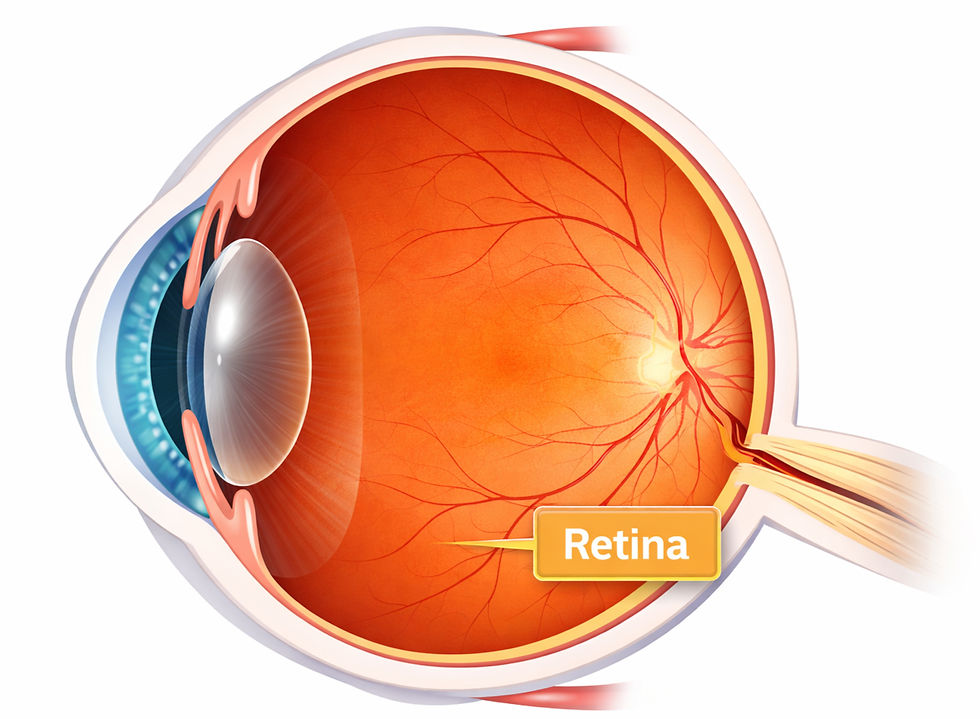
When we look at your retina, we’re not just checking your vision, we’re looking at the health of your circulation. Changes in these tiny vessels can reflect what’s happening elsewhere in the body, including the heart and brain.
Blood pressure and your eyes
High blood pressure doesn’t always cause symptoms, but it can quietly damage blood vessels over time.
In the eyes, we may see:
Narrowed or stiffened blood vessels
Tiny leaks or bleeding
Swelling of the optic nerve in severe cases
These same processes affect the heart, kidneys, and brain. Sometimes, eye changes are the first clue that blood pressure isn’t well controlled.

A side-by-side look at a healthy retina compared to one affected by severe high blood pressure. In hypertensive eye disease, we commonly see bleeding, narrowed or damaged blood vessels, areas of leakage, and white “fluffy” spots called cotton wool spots—signs that the circulation is under strain.
Cholesterol and circulation
Cholesterol plaques don’t just affect large arteries like the coronary arteries, they can impact small vessels too.
In the eyes, this may show up as:
Reduced blood flow to the retina
Sudden vision changes if a vessel becomes blocked
Again, the eye findings can mirror cardiovascular risk elsewhere in the body.
The important point? Eye damage and heart disease often progress together.
Catching retinal changes early gives us a chance to intervene sooner, sometimes before symptoms appear.
Why regular eye exams matter (even if you see well)
Many people say, “My vision is fine, I don’t need an eye test.” But vision is only part of the story.
A comprehensive eye exam can:
Detect early vascular changes
Prompt referral back to your GP for blood pressure, cholesterol, or diabetes review
Act as another layer of protection for your overall health
Think of it as preventative care, not just a vision check.
The big picture
Your eyes don’t exist in isolation. They’re connected to your heart, your brain, and your overall wellbeing. Sometimes, looking into the eyes helps us spot health issues early before they become bigger problems.
And that’s why eye care is about much more than seeing clearly.


The insights shared about the connection between eye health and overall cardiovascular condition are indeed intriguing. It raises an important aspect of health care, emphasizing that our eyes can reveal much more than we typically acknowledge. This relation highlights a potential oversight in preventive medicine, where Royal Reels of health advice often neglect the subtleties of eye examinations. A multifaceted approach to health might prevent more serious complications down the line.
This article raises important points about the interconnectedness of eye health and overall well-being. The emphasis on how our eyes can reveal cardiovascular issues is particularly striking. It's imperative that we view eye exams through a broader lens; they can serve as a vital early warning system. Ignoring the health of our eyes may lead to missed opportunities for proactive care. In this context, understanding the role of eye health could be regarded as a true Winspirit https://www.bodyblueprint.co.nz/ for preventative medicine.
This article highlights a crucial aspect of health interconnectivity, particularly the relationship between eye health and cardiovascular issues. It's fascinating to think about how our eyes can reveal hidden conditions, similar to how The Pokies https://stoptheintervention.org/ can captivate players with unexpected outcomes. Just as one should not treat gambling lightly, eye tests should not be overlooked, as they play a vital role in overall health monitoring.